
Meeting summaries often miss the intent of a meeting. They are accurate, well written, and technically correct, yet they stay high level and rarely reflect what we were actually trying to achieve. They tell us what was said, but not why the meeting existed, what kind of moment it was, or what should move because of it. That gap is not a failure of AI. It’s a design gap.
With Microsoft Copilot inside Microsoft Teams, something important has changed. You can now work with meeting summary templates directly in the meeting recap. This is not a separate tool or add-on. It lives exactly where people already go after a meeting to catch up. On mobile, you can choose predefined templates like Speaker summary or Executive report. On laptop or desktop, you can go further and create your own custom template.
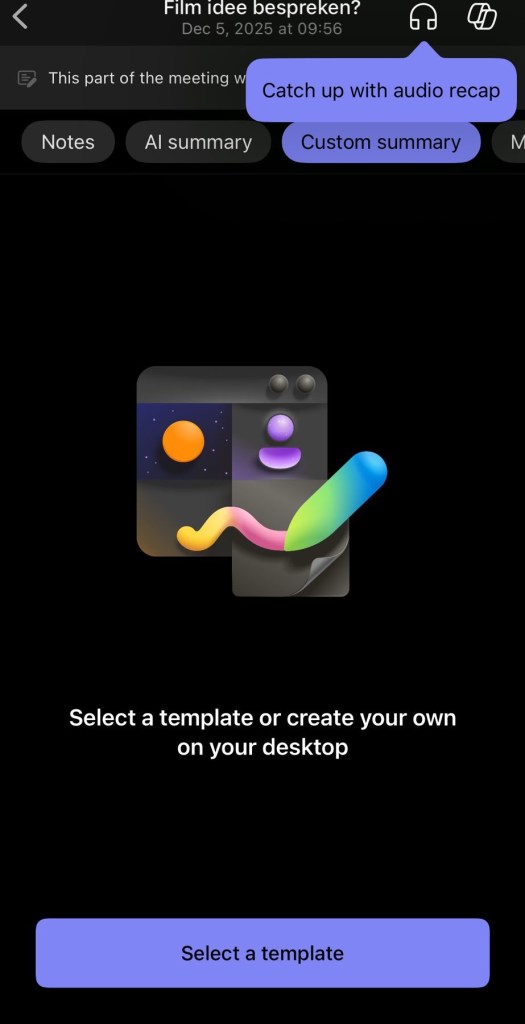
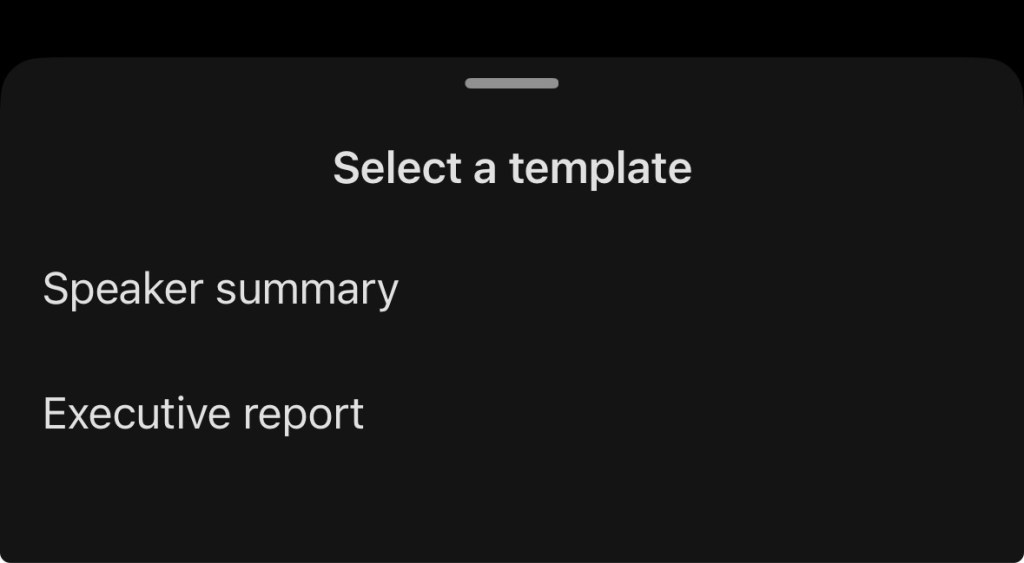
Copilot still uses the full transcript as the source of truth. What changes is how that transcript is translated into output. A template tells Copilot how to listen. It defines what kind of meeting this was and what matters most in the summary. That single shift brings intent back into the picture.
This matters because meetings are never neutral. A leadership meeting is about decisions. A project update is about reality versus planning. An alignment session is about shared understanding. A brainstorm is about ideas. A crisis call is about structure and accountability. When all of these are summarized in the same generic way, intent disappears and summaries start floating above the real work.
Templates fix this by making the meeting type explicit. A leadership or executive template guides Copilot to focus on decisions that were made, decisions that were deliberately postponed, strategic trade offs, risks, and items that require leadership follow up. A project update template pushes Copilot to look at progress versus planning, blockers, dependencies, scope changes, and emerging risks, turning the summary into a reality check instead of a list of updates. An alignment template helps Copilot capture where alignment exists, where it does not, which assumptions were challenged, and which questions remain open, so shared understanding becomes visible rather than assumed. A Speaker summary highlights contributions and perspectives, while an Executive report filters everything down to outcomes and risks.
What I like most about this is that it removes interpretation from the reader. The intent is already embedded in the structure of the summary. People no longer have to guess what the meeting meant or what is expected next. In my view, this is the moment where AI summaries stop being a nice to have and start becoming part of how organizations think, decide and move forward.
 Femke Cornelissen
Een gedachte over “Stop summarizing meetings. Start designing outcomes.”
Reacties zijn gesloten.