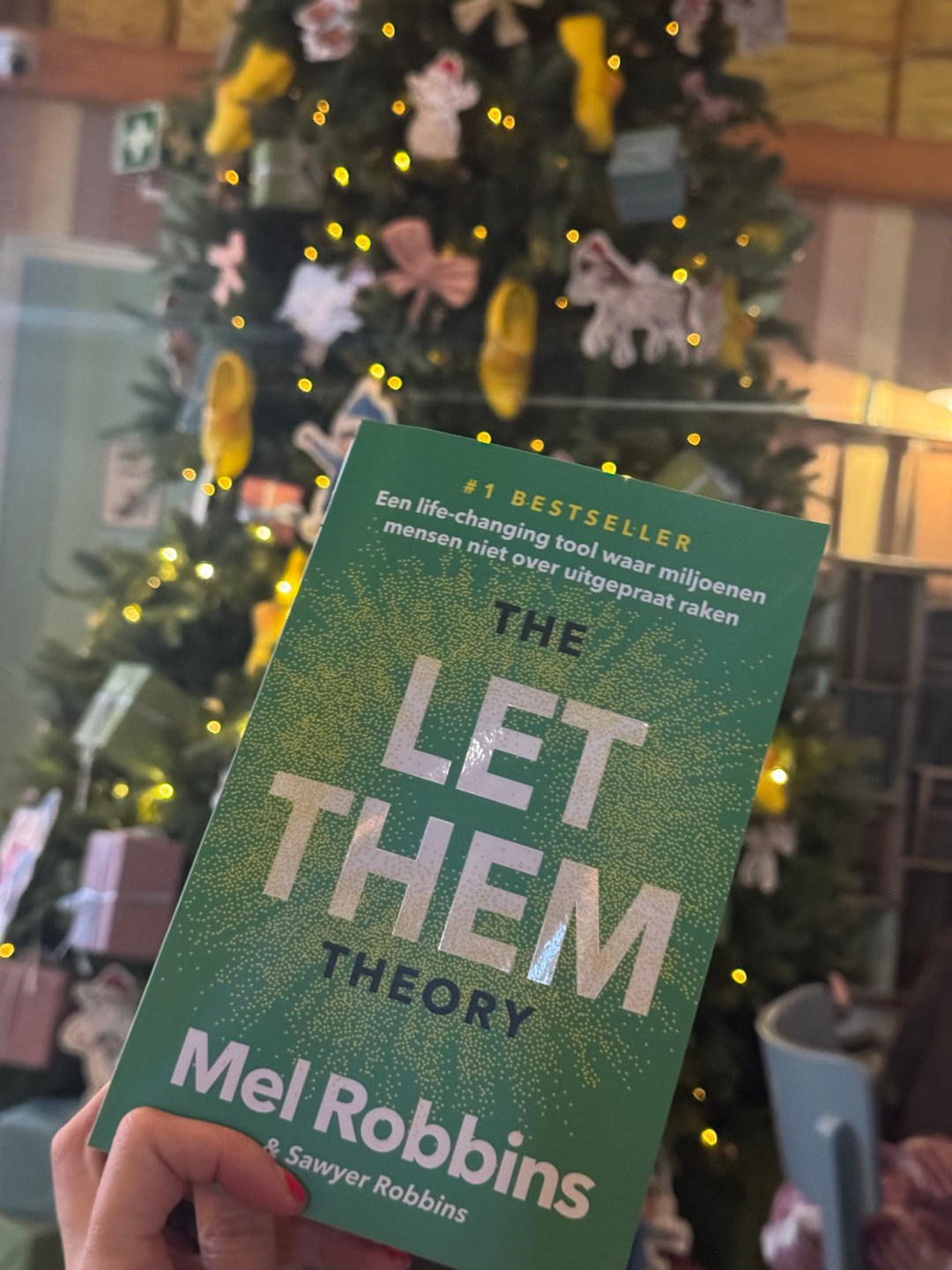
Some books you read. Others read you.
The Let Them Theory by Mel Robbins belongs firmly in the second category for me. Not because the concept is complex, but because it is deceptively simple. And simplicity, when it hits the right nerve, has a way of exposing behavior you no longer want to ignore.
I operate in environments where visibility, direction, and change are part of daily work. Where leadership often means being ahead of the curve, setting pace, and inviting others to follow. What this book surfaced for me is how easily leadership can slide into something else entirely. Not into insecurity, but into adaptation. Subtle, almost invisible adaptation.
What struck me was recognizing how often we show up slightly differently than who we really are. Not in a dishonest way. More in a socially acceptable one. Softer. More carefully phrased. More tuned to how it might land than to what actually needs to be said. As I read, I realized how familiar that pattern is to me.
There are moments where I already know my direction, my answer, my conviction.. and yet I find myself adjusting it. Framing it. Slowing it down. Not because I doubt it, but because I anticipate reactions. Because I sense discomfort before it’s even expressed. Because I want the message to be received, not resisted.
That’s when leadership quietly turns into performance.
The Let Them Theory forced me to ask a question that goes beyond productivity or mindset: how much energy am I spending managing perception instead of protecting direction? How often am I translating myself into a version that feels easier for others, while slowly increasing the distance between who I am and how I show up?
“Let them” is not about disengaging. It is about recognizing what is not yours to carry. Reactions are not responsibilities. Resistance is information, not rejection. Misunderstanding does not automatically mean you are wrong. And alignment does not always come before movement.
What resonated deeply is how often, in leadership, we attempt to control what cannot be controlled. Timing. Acceptance. Emotional readiness of others. While real influence begins when you pull your attention back to what you can control: your decisions, your behavior, your focus.
The second part of the theory, “let me,” is where the work truly starts. Because there are no excuses there. That is where ownership lives. What do I choose when I stop anticipating resistance? What remains of my leadership when I no longer reshape my words to be more palatable? Who do I become when I allow myself to be fully aligned with my own direction?
Since reading this book, I notice a shift in how I listen and respond. I hear the difference between emotion and signal more clearly. I am quicker to recognize when something deserves empathy, and when it should not influence direction. There is more calm in my decisions, not because opinions no longer matter, but because they no longer dictate my pace.
This book is not about letting go in the sense of becoming distant or detached. It is about mature leadership. Knowing when to connect and when to stand firm. Understanding the difference between empathy and self-adjustment. Accepting that not everyone is meant to move at your speed, share your vision, or align with your timing and that this does not invalidate your direction.
The Let Them Theory did not teach me how to lead. It reminded me what happens when I stop correcting myself unnecessarily. When I stop performing and start standing. When I allow space where space is needed, and hold direction where direction truly matters.
Perhaps that is the essence of leadership today. Not carrying everything. Not managing every response. But consciously choosing what is yours to hold.. and letting the rest stay where it belongs.
 Femke Cornelissen